By Chelsey Schade, Trained Cosmetologist | Last updated: June 11, 2026
Disclosure: This article contains affiliate links. If you buy through them I may earn a small commission at no extra cost to you. I only recommend products I would genuinely use or suggest to a client.
If you have ever stood in front of a shelf of K-beauty bottles wondering why one watery liquid is called an essence and the next one is called a serum, you are not alone. They look almost identical. They sit in the same part of the routine. They both promise glowing, healthy skin. So what is the real difference, and do you need both? And if you want that glow without the SK-II price tag, these are my favorite SK-II Facial Treatment Essence dupes.
Here is the straight version, from someone who has spent years putting these products on real faces.
The short version
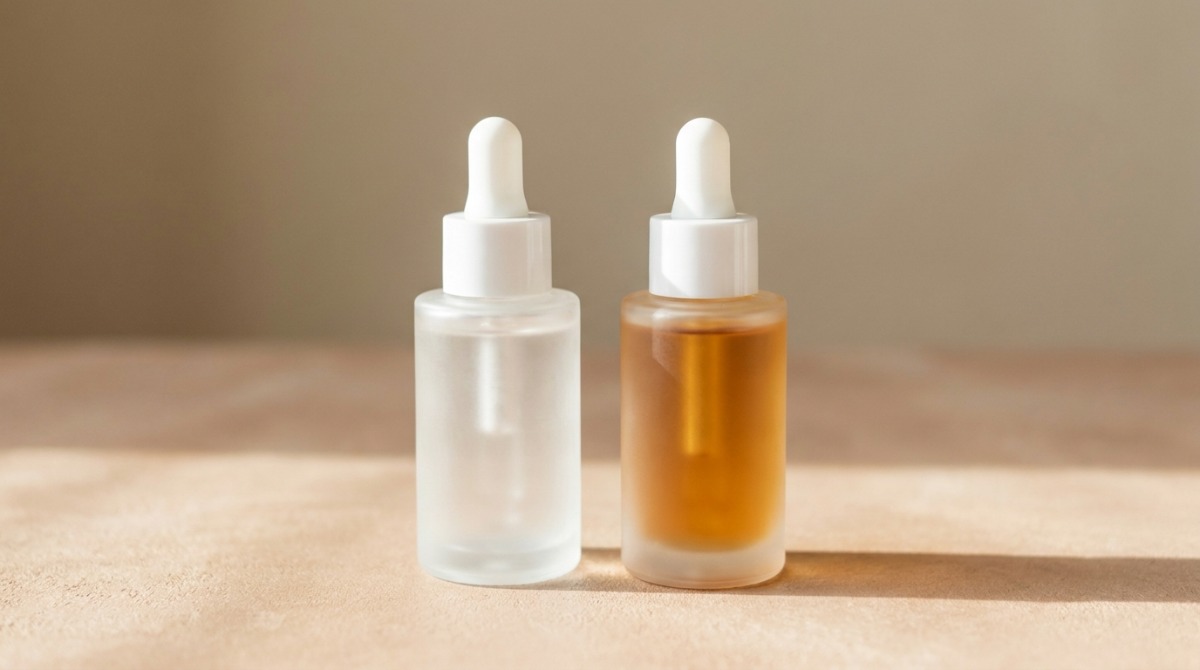
An essence is a lightweight, watery step that hydrates and preps your skin so everything after it works better. A serum is a more concentrated treatment that targets a specific concern like dullness, fine lines, or uneven tone. Essence sets the stage, serum does the focused work, and when you use both you go thinnest first: essence, then serum.
What an essence actually does
Think of an essence as a hydration and absorption booster. It is usually thin, almost like water, and it goes on right after your toner. Most essences lean on humectants such as hyaluronic acid, fermented ingredients, and soothing botanical extracts. The goal is not to fix one big problem. The goal is to leave your skin plump, soft, and ready to drink in the products that follow.
In a traditional Korean routine, essence is the bridge between cleansing and treatment. Freshly cleansed skin is clean but also a little vulnerable, and a good essence calms that down and improves how well your next steps absorb. Skip it and your treatments can sit on the surface instead of sinking in. If you want to see where this fits in the full lineup, our guide on how to layer Korean skincare correctly walks through every step in order.
What a serum actually does
A serum is where the targeted work happens. Serums carry a higher concentration of active ingredients and are built to address something specific: brightening, firming, smoothing texture, fading the look of dark spots, or calming breakouts. They are still lightweight and fast absorbing, but they are working harder on one job than an essence is.
This is why most of the K-beauty products people get excited about are technically serums or serum-style treatments. A snail mucin serum, a PDRN serum, a gentle retinol: those are all treatment steps, not hydration-and-prep steps. If you are shopping for a focused result, you are usually shopping for a serum.
A few of the most popular serum categories we cover:
- Snail mucin, for hydration, barrier support, and a smoother look. See our honest comparison of the best Korean snail mucin.
- Retinol, for texture and long-term smoothing, eased in slowly. See the best Korean retinol for beginners.
- PDRN, the salmon DNA ingredient everyone is asking about. See the best Korean PDRN serums and our plain-language explainer on what PDRN actually is.
Essence vs serum at a glance
| Essence | Serum | |
|---|---|---|
| Main job | Hydrate and prep | Target a specific concern |
| Texture | Thin, watery | Light but more concentrated |
| Where it goes | After toner | After essence |
| Active strength | Lower | Higher |
| Best for | Everyday hydration and absorption | Brightening, firming, texture, tone |
Where ampoules fit in
You will also see the word ampoule, and it adds to the confusion. An ampoule is usually described as a supercharged serum: an even higher concentration of actives, meant for short bursts when your skin needs extra help, like before an event or after a rough week. You do not need an ampoule to have a good routine. It is a nice-to-have, not a must-have. If serums are your daily treatment, ampoules are the occasional booster shot.
How to layer them
Korean routines follow one simple rule: thinnest to thickest. That order lets each product absorb instead of getting blocked by a heavier one on top. A typical order looks like this:
- Cleanse
- Toner
- Essence (hydrate and prep)
- Serum or ampoule (treat)
- Moisturizer (seal)
- Sunscreen in the morning (protect)
This thin-to-thick logic is the backbone of the whole Korean glass skin routine, and it is also why people get such consistent results from K-beauty even with simple products. If you want a deeper walkthrough, including what not to mix, the layering guide covers it step by step. And if you are wondering whether two specific actives can share a routine, our piece on using retinol with snail mucin is a good example of how to sequence them safely.
Do you actually need both?
Here is the honest answer most product pages will not give you.
If your skin is generally healthy and your main goal is hydration and a soft, glassy finish, an essence plus a good moisturizer can carry you. A serum becomes worth it once you have a specific concern you want to work on, like texture, dark spots, or early fine lines.
If you are in your twenties with no major concerns, you can often start with essence and add a serum later when your skin tells you it needs one. If you are dealing with a targeted issue now, the serum is the step doing the heavy lifting, and the essence is the support player that helps it absorb. You do not have to run a ten-step routine to get results. You have to run the right steps for your skin.
Chelsey’s bottom line
The label on the bottle matters less than the texture and the ingredient list. I have seen essences that act like serums and serums that are really just hydrating mists. When a client asks me which to buy, I tell them to ignore the marketing word and read two things: how thin it is, and what it is trying to do. A thin, humectant-heavy formula is your prep step. A concentrated, single-goal formula is your treatment step. Build your routine around the concern you actually have, not around owning one of every bottle.
Frequently asked questions
Can I use a serum without an essence?
Yes. A serum still works on its own. An essence simply improves hydration and absorption, so your serum tends to perform a little better when it follows one. If you only want one of the two, choose based on your goal: essence for hydration, serum for a specific concern.
Can I use an essence and a serum together?
Absolutely, and in a classic K-beauty routine you would. Essence goes on first, then your serum. Pat each one in and give it a moment to absorb before the next layer.
Which goes first, essence or serum?
Essence first, serum second. The rule is thinnest to thickest, and essences are usually the thinner, more watery of the two.
Is an essence just an expensive toner?
Not quite. Toners are mostly about prepping and balancing the skin right after cleansing. Essences focus on delivering hydration and helping your treatment steps absorb. Some hybrid toner essences blur the line and do both.
Do I need an ampoule too?
No. An ampoule is an optional booster for when your skin needs extra support. A solid routine of cleanse, hydrate, treat, moisturize, and protect does not require one.
About the author
Chelsey Schade is a trained cosmetologist with salon and freelance experience. She personally evaluates every product recommended on The Beauty Docket, with a focus on ingredient quality, barrier-safe formulation, and honest verdicts. Read more about Chelsey or see how we review products.
Want glass skin without the guesswork?
Get Chelsey’s free Glass Skin Starter: the exact AM and PM routine order, plus her five principles for glass skin. One printable page.